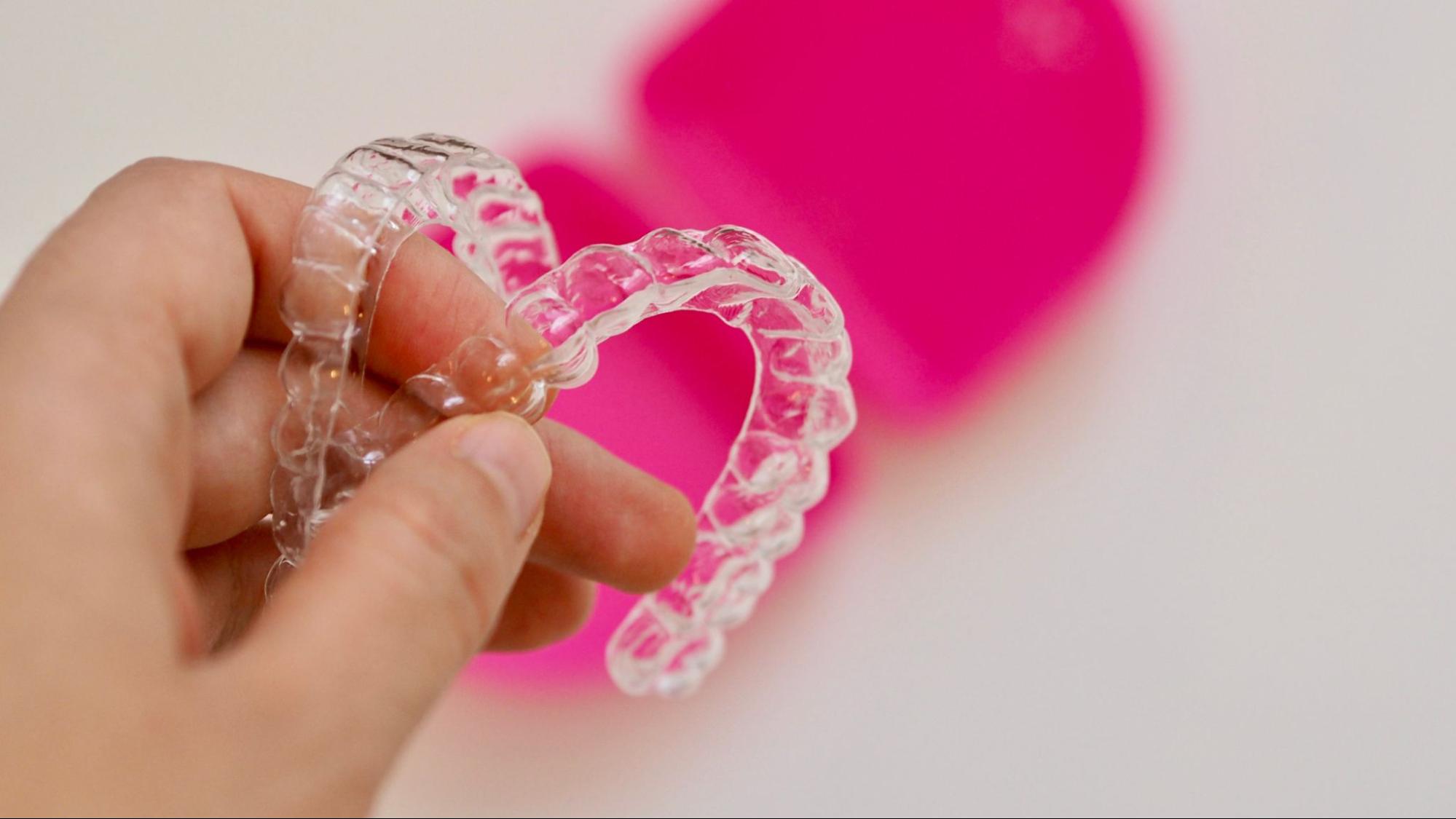
What Is Invisalign for Teens?
Invisalign for teens is a series of custom clear plastic aligners that straighten teeth without brackets or wires. Your teen wears each tray 20 to 22 hours a day, taking it out to eat, brush, and play sports. Invisalign Teen also includes small compliance indicator dots that fade with wear, so you can tell the trays are actually going in. It’s one of the options families ask about most at Bankhead Orthodontic Specialists, usually before they know how it differs from braces, and the answers tend to shape the whole decision.
Teen aligners are built a little differently than adult trays. They include eruption tabs, which hold open space for permanent teeth that haven’t fully come in yet. That means your teen doesn’t have to wait until every last molar arrives to get started.
Aligners handle more than parents expect. Invisalign can treat:
- Crowded or overlapping teeth
- Gaps and spacing
- Overbite and underbite
- Crossbite and open bite
- Many mild-to-moderate bite issues
Because the trays come out, your teen can eat normally, brush and floss like usual, wear a mouthguard at practice, and play a wind instrument without brackets in the way. School pictures? Trays out for two minutes, and nobody’s the wiser.
Some bites still respond better to metal braces or clear braces. An exam tells you which route makes sense.

How Invisalign Treatment Works Step by Step
Invisalign treatment starts with a free consult and a digital scan of your teen’s teeth. Your doctor builds a 3D plan, then Invisalign manufactures the full series of custom trays. Your teen switches trays every one to two weeks, comes in for short check-ins, and finishes with retainers to hold the new smile.
Here’s the step-by-step:
- Free consult and records. We take digital photos, digital X-rays, and a digital scan. No goopy, gaggy impressions, which teens appreciate more than anything else we tell them that day.
- 3D plan and smile preview. Your doctor maps every tooth movement and shows the projected final smile before treatment begins. Teens who see the “after” tend to buy in faster.
- Delivery day. Trays arrive, we walk your teen through insertion, removal, and cleaning, and we set expectations for wear time.
- Attachments, if needed. Small tooth-colored bumps get bonded to certain teeth so the aligners can grip and produce trickier movements like rotations. They come off at the end.
- Tray changes at home. Each new tray picks up where the last one left off. As your teen progresses, every tray moves the smile a little closer to done.
- Check-ins every 6 to 10 weeks. We track progress, hand off the next batch of trays, and troubleshoot early if wear time is slipping.
- Retainers. Once teeth reach their final spots, nightly retainer wear keeps them there.
Dr. Rodabough, Dr. Oldroyd, Dr. Ethington, and Dr. Bleyer are all board-certified, and every plan gets built around what the exam actually shows, not a one-size template.
What Are the Benefits of Invisalign for Teens?
High school is a socially loaded few years. That’s a real factor in whether a teen wears their appliance, and clear aligners tend to land well with kids who feel self-conscious about their smile.
The practical wins matter just as much:
- Discreet look. Most classmates won’t notice. Teens who hate photos suddenly hate them less.
- Easier hygiene. Trays come out, so brushing and flossing stay normal. That lowers the risk of decay and white spot marks that can show up around brackets.
- No food restrictions. Popcorn, caramel, corn on the cob, all fine. Aligners come out first.
- Fewer emergencies. No brackets to pop off during a game or a bite of pizza, which means fewer surprise repair visits.
- Sports and activities. Trays come out for mouthguards, wrestling practice, band, and choir.
- Shorter, less frequent visits. Many aligner appointments are quick progress checks.
- Doctor oversight. Aligner plans still get mapped and monitored by board-certified doctors, so nothing runs on autopilot between tray changes.
- Motivation built in. The digital preview gives teens something to aim for, and the fading compliance dots give you an honest read on wear time.
One caveat worth saying out loud: aligners only work when they’re in the mouth. The trade-off for all that freedom is responsibility.
Is Invisalign or Braces Better for Teens?
Both options can reach the same finish line. The right pick depends on your teen’s bite and your teen’s habits.
Braces have one big advantage: they don’t rely on cooperation. If your teen loses phone chargers weekly and forgets lunch twice a month, fixed appliances may finish faster in real life, even if aligners look better on paper.
Complex bite corrections can also favor fixed appliances. Bigger skeletal differences, severe rotations, and cases needing significant vertical control sometimes respond better to braces, or to a hybrid plan that uses both.
Clear braces sit in the middle. They’re fixed, so nothing gets left in a napkin at lunch, but the brackets match the natural color of your teen’s teeth.
The best question to ask at your free consult isn’t “which one looks better?” It’s “based on my teen’s exam, which option gets us the strongest smile?” Our board-certified doctors will tell you straight.
Helping Your Teen Stay on Track with Invisalign
Aligners put the outcome in your teen’s hands, which is either the best thing about them or the hardest, depending on the teen. A few habits separate finishing on schedule from adding months to the plan.
- One rule about the case. Trays go in the case, never in a napkin or a pocket. Most missing aligners disappear at a lunch table.
- Pick a tray-change day. Switching on the same evening each time turns it into a routine instead of something to remember.
- Switch before bed. The first hours in a new tray are the tightest, and sleeping through them takes the edge off.
- Keep a travel kit. A case, toothbrush, and floss in the backpack means trays go back in after lunch instead of staying out all afternoon.
- Watch the indicator dots. They fade with wear, so they give you an honest read without turning every evening into an interrogation.
- Speak up early. If wear time has been slipping, say so at the check-in. Adjusting a plan is easy. Undoing months of stalled progress is not.
If those habits sound like a stretch for your teen, that’s useful information rather than a dealbreaker. It usually just means fixed braces are the better fit, and there’s no downside to saying so at the consult.
Is Your Teen a Good Candidate for Invisalign?
Most teens are candidates. A few aren’t, and honesty upfront saves everyone frustration. At Bankhead Orthodontic Specialists, that call comes after an exam rather than over the phone, because two teens with similar looking smiles can need very different plans.
Good signs your teen is a fit:
- Most permanent teeth have erupted, or the plan accounts for the ones still coming in
- The bite issue can be corrected through aligner-based tooth movement
- Your teen can realistically keep trays in 20 to 22 hours a day
- Brushing and flossing already happen without a nightly argument
- Your teen actually wants this and gets a say in the decision
Signs braces may serve your teen better:
- A history of losing retainers, mouthguards, or anything else that isn’t attached
- Low motivation, or steady pushback about treatment in general
- Significant skeletal differences between the upper and lower jaws
- Habits like clenching that need appliance management alongside alignment
The American Association of Orthodontists recommends a first orthodontic evaluation by age seven. Teens who came in early often arrive with a documented growth record, which makes planning far more precise.
Nothing beats an exam. Digital scans, photos, and X-rays give Dr. Rodabough, Dr. Oldroyd, Dr. Ethington, and Dr. Bleyer what they need to give you a definitive yes or no, and the consult is free either way.
Frequently Asked Questions About Invisalign for Teens
How long does Invisalign take for teens?
Most teen cases run about 12 to 18 months, though the range shifts with complexity. Mild crowding can wrap up sooner, while significant bite correction takes longer. Wear time is the biggest variable of all, since teeth only move when trays are in.
What if my teen forgets to wear their aligners?
Progress stalls, and trays start feeling tight because teeth haven’t caught up to the current stage. Invisalign Teen aligners include compliance indicator dots that fade with wear, so we can spot a pattern at check-ins instead of months later. A phone reminder and a fixed tray-change day fix most slip-ups.
Can teens who play sports or instruments use Invisalign?
Yes, and this is one of the strongest arguments for aligners. Trays come out for a mouthguard at practice, then go back in afterward. Wind and brass players don’t have to adjust to brackets against the inside of the lip, which matters during marching season.
Does Invisalign hurt?
Expect mild pressure or tightness for a day or two after switching to a new tray. That sensation is the aligner doing its job, and it fades as teeth settle. Most teens describe it as awareness rather than discomfort, and switching trays before bed makes the adjustment easier.
Can my teen still eat normally?
Yes. Aligners come out for all food and any drink other than water, then teeth get brushed before the trays go back in. No banned foods, no cutting apples into slices, no worrying about a bracket popping off at a birthday party.
Will my teen need retainers afterward?
Yes, and this part isn’t optional. Teeth naturally drift over time, so nightly retainer wear protects the result. We’ll fit retainers as soon as active treatment finishes and show your teen exactly how to clean and store them. Retainer checks stay part of the relationship at Bankhead Orthodontic Specialists long after the last tray comes out.